
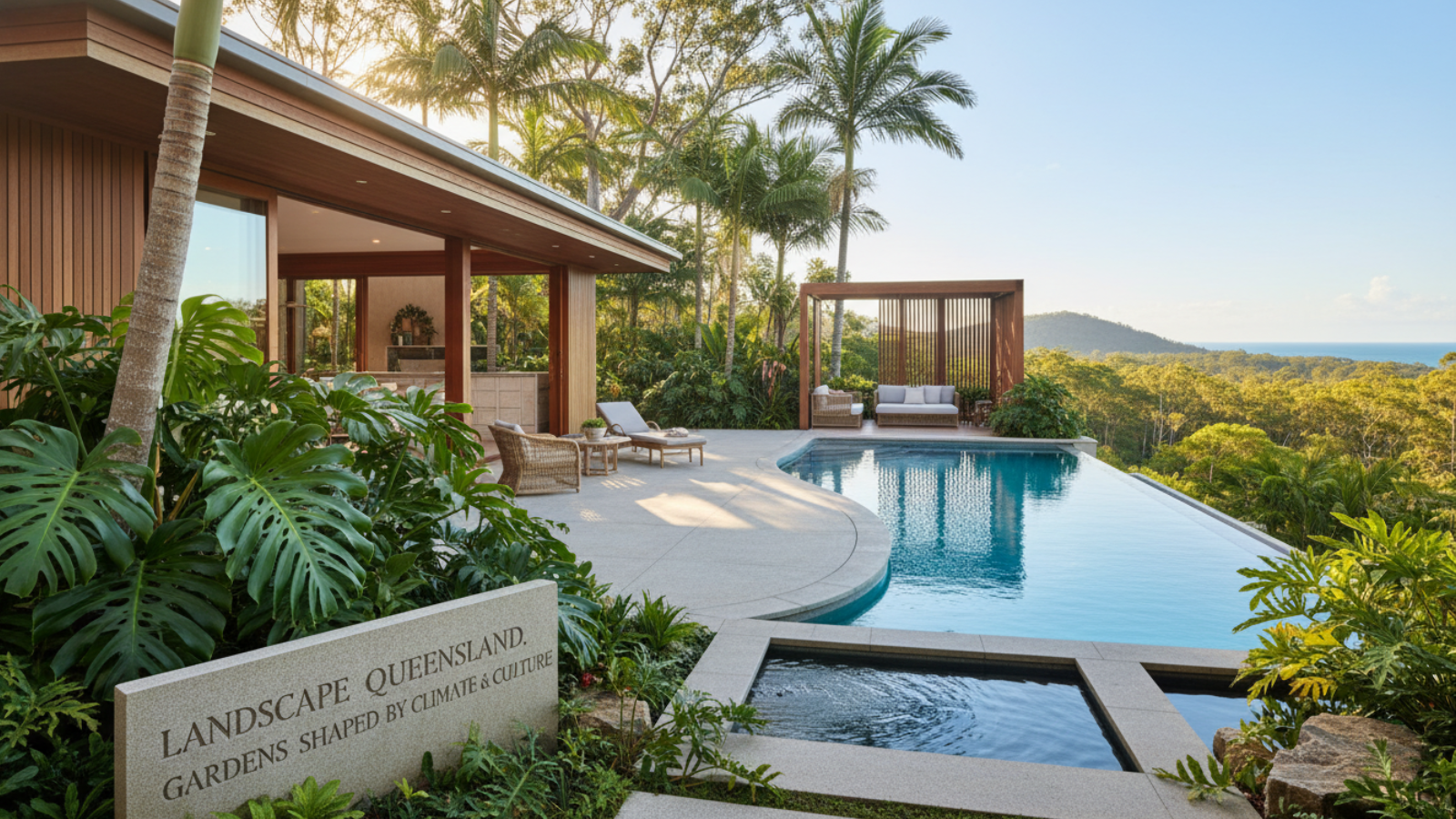
Landscape Queensland: Gardens Shaped by Climate & Culture
If you really want to get Queensland — the real Queensland — forget the tourist brochures full of beaches and high-rises for a minute. Wander into someone’s backyard, a quiet suburban street, or one of the old public gardens, and you’ll start to feel it: this deep, quiet conversation the place has been having with its people for generations. Landscape Queensland isn’t about forcing European prettiness onto a stubborn landscape. It’s more like learning to listen — to the heat, the sudden storms, the dry spells — and designing gardens that answer back in kind.
What Really Shapes Landscaping in Queensland
Living here, the first thing that hits you is the climate. It’s not just “hot”. It’s tropical up north, subtropical along the coast, and bone-dry further west. That variety forces everyone — homeowners, designers, even council planners — to get clever. These days, the big ideas in landscape Queensland are sustainability, toughness, and using as little water as possible.
People have mostly moved away from thirsty exotics that need constant babysitting. Instead, native plants are having their moment, and for good reason. They’re built for this place: less watering, less fuss, and they actually help the birds, bees, and lizards that belong here. The other thing you notice everywhere is the “outdoor room” idea — patios, decks, pergolas shaded by trees so you can actually use the garden all year round without melting. Once you understand those basics, the whole garden culture in landscape Queensland starts making sense.
How Queensland’s Gardens Got Started — and Grew Up
Back in the early days, the first European settlers tried to recreate what they knew: neat English flowerbeds, roses, maybe a bit of lawn. It was part coping mechanism, part statement — turning the wild into something familiar. But the soil, the heat, the rains (or lack of them) kept pushing back.
Over time, people learned. The Brisbane City Botanic Gardens, started in 1828 originally as a humble food plot for the new penal colony, became a kind of living classroom. It’s now recognised as Queensland’s most important non-Aboriginal cultural landscape — a continuous thread of gardening since those first plantings. From there, the shift happened slowly: less imported show-offs, more respect for what grows here naturally. Community things like school gardens, Arbor Day plantings, and local nurseries helped too — generations of kids getting their hands dirty and learning that sustainability isn’t a buzzword, it’s just common sense in landscape Queensland.
What Queensland Gardens Actually Say
Modern landscape Queensland carries a lot of meaning under the surface. Choosing natives — a tough eucalypt, a flowering grevillea, a shady kurrajong — isn’t just practical; it’s a quiet statement of belonging. It says we’ve grown up enough to value what’s already here instead of importing someone else’s idea of beauty.
You see it in the materials too: rough local stone walls, weathered timber, mulched paths that feel part of the bush. And shade — oh, shade is sacred here. It’s not just about keeping cool; it’s about hospitality, about making space for people to gather when the sun is brutal. A good landscape Queensland garden today isn’t decoration. It’s a living, breathing ecosystem that gives back.
How the Style Changes Across the State
Queensland is massive, so the gardens change as you move. Up in the tropical north around Cairns or Port Douglas, everything feels lush and generous — big leaves, bright heliconias and gingers, palms swaying, water features catching the humidity. People borrow ideas from Bali or Southeast Asia, but tuned to local conditions.
Down in the subtropical south-east (Brisbane, Gold Coast, Sunshine Coast), it’s more mixed. You get sleek modern landscape Queensland with strong architectural plants alongside softer, relaxed native cottage styles full of bottlebrush, grevillea, mat rush, and gymea lilies.
Further inland and west, it’s all about survival — xeriscaping, rocks, gravel, almost no lawn. Plants like acacias, emu bush, and tough succulents rule.
Regional Overview at a Glance
Here’s a quick snapshot:
- Tropical North — High heat + humidity + rain → Lush, colourful, big foliage (Heliconias, gingers, tropical palms)
- Subtropical South-East — Warm humid summers, milder winters → Modern natives + outdoor living spaces (Bottlebrush, grevillea, mat rush, gymea lily)
- Inland / Arid West — Brutal heat + very low rain → Water-wise, rock gardens, minimal grass (Acacia, Eremophila, succulents)
That diversity is why good landscape services Queensland are always local — what works in Cairns would die in Longreach.
Common Misconceptions (and What Actually Happens)
A lot of newcomers think Queensland is one big tropical playground where anything grows. Not even close. The environment is fragile, water is precious, and rules can be strict. Native gardens aren’t automatically messy or wild-looking either — plenty are beautifully structured, with clean lines and sculptural plants.
A few practical tips if you’re visiting or moving here:
- Respect the water rules — they’re not optional, even near the coast sometimes.
- Chase the shade — those big old trees in parks are heroes; councils have been planting them for decades.
- Watch what’s thriving locally — healthy native plants in nearby gardens are your best guide to what really works.
Why This Matters When You Travel Here
For anyone passing through, paying attention to the gardens gives you a backdoor into how Queenslanders think and live. Public parks and botanic spaces aren’t just pretty — they’re living records of trial and error, adaptation, and growing respect for the land. You’ll see decades of research in a single rainforest walk or a quiet native bed. And because outdoor living is so central here, the best real moments often happen in these spaces: a barbecue under gums, a market in dappled shade, kids chasing butterflies.
Everyday Life and the Larger Picture
These ideas don’t stay in backyards. In Brisbane and along the coast you’ll spot water-sensitive streetscapes, native grasses in road medians, front yards layered to bring birds and pollinators right to the house. It’s quiet pride — a shared understanding that we live in a beautiful, tough place that deserves thoughtful care.
The Deeper Connection — Landscape and Who We Are
For a lot of us, the landscape isn’t background. It’s memory. The smell of eucalypt after rain, the sound of cicadas in summer, the sight of a childhood bottlebrush in flower — these things tie generations together. Historic spots like the City Botanic Gardens remind us where we’ve come from. Modern gardens remind us where we’re trying to go: somewhere more connected, more resilient, more ourselves.

0 comments